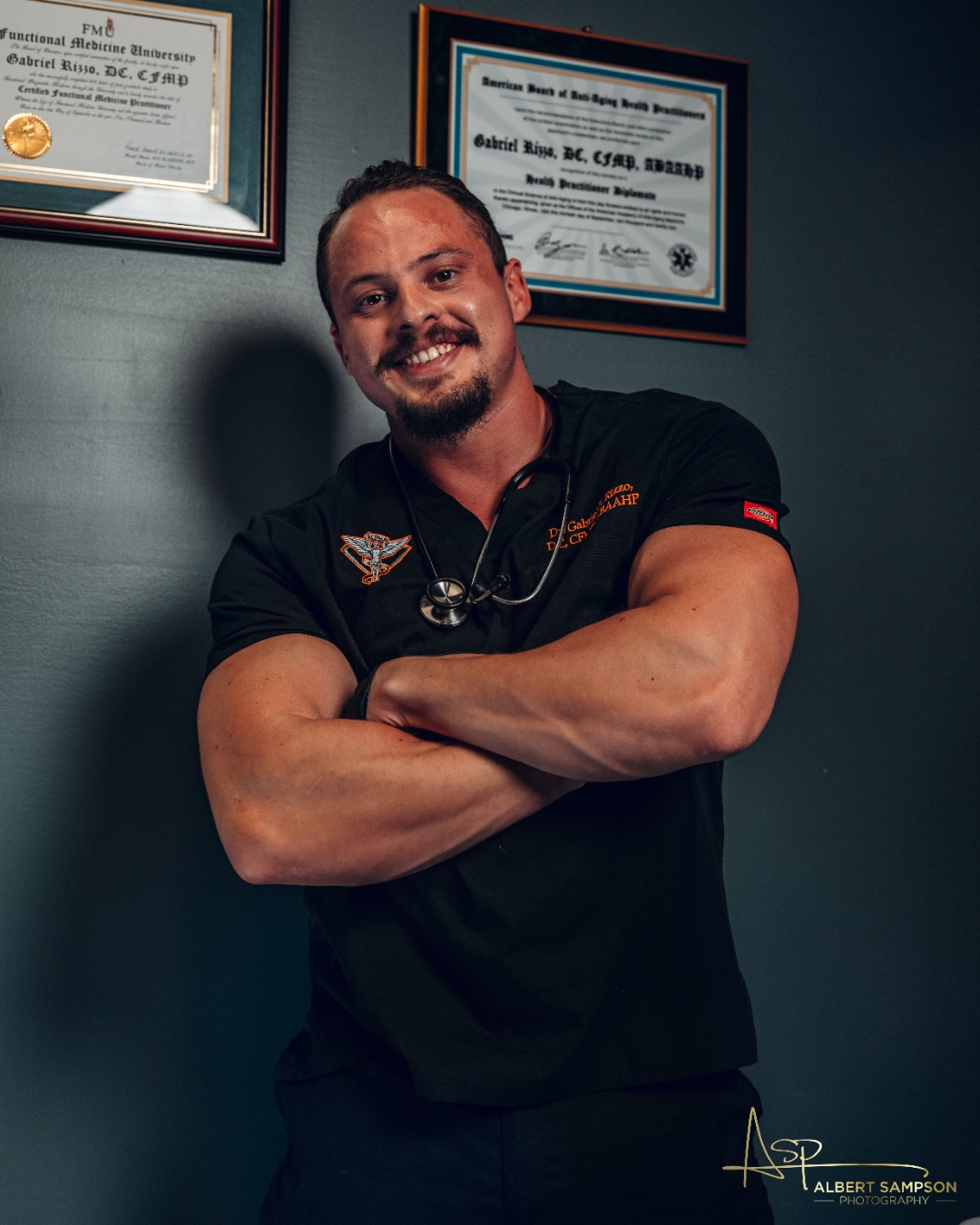
There is a conversation I have almost every week. A patient arrives with a list of prescriptions, a shelf of supplements, and a real problem that none of it has solved. They are not looking for shortcuts. They have been told, over and over, that the answer to feeling unwell is one more pill, and it has not worked.
It has not worked because the premise is wrong. You cannot medicate a poor diet. You cannot supplement your way past inadequate sleep. You cannot prescribe your way out of a sedentary life. Medication and targeted therapy are genuinely powerful tools, and we use them at Alpha Care where they are clinically warranted. But they are built on top of a foundation, and when that foundation is not there, the best you get is a masked symptom while the underlying problem continues.
So before we treat anything, we look at what everything is being built on.
Load and Capacity: The Governing Equation
The most useful frame I can give a patient is this: your body is constantly absorbing load, and constantly repairing. Health is what happens when your capacity to heal, detoxify, and recover stays ahead of the load being placed on you. Disease, pain, and dysfunction are what happen when it does not.
That is not a metaphor. It is the same biology whether we are talking about a muscle or an organ.
A lifter tears a hamstring because the tissue was asked to absorb more force than its current repair state could tolerate. Nothing exotic happened. Load exceeded capacity in that moment, and the tissue failed. Give that same lifter adequate protein, real sleep, sane programming, and appropriate recovery between heavy sessions, and the same load becomes an adaptation instead of an injury.
Now scale it up. Hepatic failure from decades of heavy drinking is the identical equation running on a longer clock. Alcohol imposes a load. The liver has a finite capacity to metabolize it and repair the resulting damage. When the exposure comes faster than the repair, the injury accumulates. Fatty change becomes inflammation, inflammation becomes fibrosis, fibrosis becomes cirrhosis. The organ did not fail because of one drink. It failed because the load stayed ahead of the healing for years.
The clinically important part is the inverse. Lower the dose, lengthen the interval between exposures, and support the repair machinery with real nutrition and real sleep, and the same substance produces a very different long-term outcome. That is why two people with similar habits can end up in completely different places, and it is why I care as much about your recovery capacity as I do about your exposures.
I want to be careful here, because this is not permission. Genetics modify the whole equation. Some patients have variants in detoxification and methylation pathways that meaningfully reduce their margin, and they will pay a price at a level of exposure that someone else tolerates. That is exactly why testing can be useful when clinically needed: it helps us investigate the associated systems rather than assume.
Toxic Burden Is Not Only What You Think It Is
Every patient has a toxic burden. For some it is unremarkable background exposure: the air, plastics, water, the residue of ordinary modern life. For others it is far more direct and far more consequential: alcohol, tobacco, recreational drugs, and a diet built largely from ultra-processed food.
Both matter, but not equally, and part of the clinical work is telling the difference honestly. A patient who drinks from plastic bottles has a different problem than a patient drinking a bottle of liquor a week, and pretending otherwise does neither of them any good. The goal is not a sterile, exposure-free life, which does not exist. The goal is to stay ahead of the load you actually carry.
The Foundations of Health
The foundation I am describing is not one thing. It is a set of variables that together determine how much load you can carry and how fast you recover from it, and biochemistry keeps proving that none of them can be neglected without cost to the others.
Diet. Whole-food intake, adequate protein, micronutrient density, and stable blood sugar. Not a branded diet — a pattern of eating that supplies the raw material every other system depends on. A diet you cannot maintain is not a plan.
Lifestyle. Daily structure, work demands, alcohol and nicotine, and consistency. What you do on most days determines far more than what you do occasionally, and a plan that does not survive your actual schedule is not going to survive at all.
Exercise. Physical activity is not optional and it is not only for people in pain. Cardiovascular conditioning and resistance training change insulin sensitivity, body composition, bone density, hormone signaling, mood, and cognition. This is why every patient at Alpha Care is assessed for how they are training, whether the intensity is adequate, and whether the programming matches their goals, age, body composition, and health status. You may never need an adjustment or a rehabilitation plan if you are not injured and not in pain. You still need to be moving correctly and training with purpose.
Toxic burden. Cumulative exposure weighed against your capacity to process and clear it, graded rather than binary, as described above.
Sleep. Repair happens during sleep. Hormone production, glucose control, tissue healing, immune function, and appetite regulation all depend on it. Sleep debt is a direct reduction in capacity, which means it raises your effective load without changing a single exposure.
Mental and spiritual health. Mental health is not a separate department from physical health. Resilience, coping mechanisms, and the ability to absorb unexpected stress without coming apart are physiological assets. Chronic unmanaged stress drives cortisol, disrupts sleep, degrades food choices, suppresses training, and blunts recovery. Past trauma is not irrelevant to a present symptom, and I am not going to treat a patient as though it is. For many of my patients, and for me, spiritual health is a real and load-bearing part of this — faith in a higher power, prayer, and staying connected to the Creator's love provide grounding when circumstances do not. Perseverance is a health variable. I have watched it change outcomes.
Environment. Where you spend your hours. Air and water quality, mold, light exposure and its timing, workplace conditions, heat and cold, and the physical demands of your day all register as load whether or not you are thinking about them.
Social support. Relationships, family, and accountability. Isolation is a measurable health risk, and reliable support is one of the strongest predictors of whether a plan gets followed long enough to work.
Genetics. This is the one input you cannot change, and that is precisely why it runs through all of the others rather than sitting beside them. Variants affecting methylation, detoxification, vitamin D receptor activity, and nutrient metabolism change how much of each foundation you personally require — how much folate, how much B12, how much recovery time, how much caution with a given exposure. Genetics is not destiny. It is the reason two patients following an identical plan do not get an identical result, and the reason the plan has to be built for the person in front of me rather than for the average.
Root Cause Is the Same Idea, Running Backward
Building from the ground up is how we move a patient forward. Root-cause evaluation is the same principle applied in reverse: where did this actually start?
That means going backward through the history — what nutrition has been, not just what it is now; what activity has looked like across years; whether stress has ever been managed. Then it means a genuinely comprehensive laboratory evaluation, because nothing in physiology happens in a vacuum and a single marker read in isolation will mislead you.
Reading those results requires holding two ideas at once. In range is not always optimal, so a value that clears a population cutoff may still be far from where you function well. But markedly out of range can be pathology, and some findings are not nuances to optimize — they need urgent workup or referral. Telling the difference, and acting immediately when a result calls for it, is part of the job.
When we do find something, the question is what it is doing downstream. Sustained inflammation interferes with hormone signaling, insulin sensitivity, tissue repair, and mood. Many hormones and nutrients must be converted to an active form first, and those conversions need specific vitamins and minerals, so adequate raw material plus a missing cofactor still yields a deficient patient. A hormone level can look fine on paper while the patient feels nothing, because the receptor is downregulated or too much of it is bound to carrier protein and unavailable to tissue.
And these compound. Poor nutrition means poor vitamin and mineral status, and those minerals are the cofactors methylation runs on — methylation being what supports detoxification, neurotransmitter production, hormone clearance, and DNA repair. Degrade it and cellular function follows. Meanwhile the same diet is pushing blood sugar and insulin upward, and insulin resistance and excess adipose tissue are metabolically active and inflammatory in their own right, releasing cytokines that raise inflammatory burden further. That inflammation degrades gut barrier function, and since a large share of immune tissue lines the gut, a compromised barrier means a dysregulated immune response. In susceptible patients, that is the setting in which autoimmune conditions surface, and sustained inflammation alongside impaired DNA repair is a recognized contributor to long-term disease risk.
I am careful not to overstate that cascade to patients, because it is a risk model and not a prophecy. But it is precisely why I will not treat a single number in isolation.
The trigger is different in every patient, and we go looking for it rather than assuming. A genetic variant affecting detoxification or nutrient metabolism. A lifestyle pattern built over decades. Environmental or secondhand toxic exposure at work or at home. Hormonal contraception that started an irregularity which never resolved after stopping. Past trauma that produced social patterns and habits of thought keeping the nervous system somewhere the body cannot recover from.
We look at the whole person, at where things could have gone wrong, and at what can actually be done about it.
We Don't Treat Symptoms in Isolation
Once you accept that the pillars interact, treating a single symptom in isolation stops making sense.
Consider depression. It is not honest to evaluate it while ignoring past trauma. It is also not honest to ignore that a patient is sedentary, socially withdrawn, sleeping badly, and eating poorly. Those are not character judgments; they are modifiable inputs with measurable effects on mood, and leaving them unaddressed while adjusting a medication is treating a fraction of the problem.
Or consider obesity. Insulin resistance may absolutely be part of the picture, and if it is, we will measure it properly with fasting insulin, HbA1c, and the rest rather than guessing. But the patient may also simply not be moving after meals. Short walks after eating, a diet with far less ultra-processed food, consistent resistance training, and real sleep will change insulin sensitivity, the number on the scale, and how that person feels mentally. We start there because it works and because it is the foundation. Then, if the lab findings, symptoms, and response to foundational care point to a need for pharmacologic help, the licensed prescriber can use it deliberately on top of a foundation that will let it work.
Where Supplements, Hormones, and Medication Actually Fit
None of this is an argument against prescribing. Prescription therapy has a real place, and when it is managed correctly by the licensed prescriber it changes lives. It is an argument about sequence and about justification: once the foundation is addressed and the laboratory picture is in front of me, anything I add has to earn its place. I should be able to say which specific finding it addresses, what I expect it to change, and how we will know whether it worked.
Supplements. A supplement is appropriate when it replaces something measurably low or supplies a cofactor the patient's biochemistry demonstrably needs. That case gets made by a lab value, by impaired absorption, by a medication that depletes the nutrient, or by a genetic variant that raises the requirement above what diet is providing. Form and dose matter as much as the ingredient — methylfolate is not folic acid to a patient with an MTHFR variant, magnesium forms differ in absorption and in what they are useful for, and vitamin D given without attention to K2 and magnesium is an incomplete intervention. What I will not do is hand someone twenty bottles and hope. If a supplement is not doing identifiable work, it comes off the list.
Hormone therapy. This is where I see the most disappointment, and almost always for the same reason. Testosterone cannot be prescribed into a patient with significant nutrient deficiencies and be expected to make them feel well. Get the total testosterone as high as you like: if B12 and folate are on the floor, vitamin D is deficient, and iron studies are poor, that patient will remain fatigued, and the therapy will get blamed for it. The same is true when estradiol is left unmanaged alongside a rising testosterone level — the patient often ends up with more complaints than they started with, including the low energy and low libido they came in to fix. Hormone therapy restores a signaling system that has genuinely declined, and it works when it is placed on a foundation capable of supporting it and when the whole axis is managed rather than one number. Estradiol, free testosterone, thyroid function, hematocrit, and iron all move with treatment. Ignoring them is not conservative care; it is incomplete care.
Prescription medication. Medication is a tool, and refusing to use a good tool is not a philosophy. Metabolic and GLP-1 therapy, thyroid replacement, and cardiometabolic treatment all have a clear and legitimate place when the clinical picture calls for them, and delaying appropriate pharmacologic treatment in the name of a natural approach can do real harm. What I am unwilling to do is use medication as a substitute for the foundation, because the same prescription produces a different result in a patient who sleeps, trains, and eats adequately than it does in a patient who does none of those things. The objective is the smallest effective set of interventions, monitored with repeat testing, and reduced when the underlying problem improves enough to allow it.
Reasoned, Documented, and Aimed at the Long Term
Everything above is meant to be defensible. Every recommendation I make is grounded in the available literature, clinical reasoning, and a mechanism I can explain — why a given marker matters, why that dose, why that form, and why in that order — rather than a trend or a single anecdote. If I cannot articulate the rationale to a patient in plain language, I have not thought it through well enough to recommend it.
The other half of that is the time horizon. Every decision gets justified twice: against the problem in front of us today, and against where it leaves the patient in ten or twenty years. Those two answers usually agree, and when they do not, the long view generally wins. Relieving a symptom in a way that quietly worsens the underlying picture is not a result. Treating what brought someone in and building toward genuinely optimal function are the same plan, not competing ones.
The Same Philosophy, a Different Plan for Every Patient
Fixing root-cause factors always runs through the foundations of health. That never changes. What changes is the specific intervention, because the damage already done and the state the end tissue is in differ from person to person, and reading that correctly takes medical biochemistry, laboratory interpretation, and clinical management rather than a template.
Biochemical individuality is why similar patients can follow similar care plans and still respond differently. Two men can use the same testosterone dose and reach comparable testosterone and estradiol levels while one feels excellent and the other does not. Hormones act through receptors, enzymes, metabolites, gene transcription, protein synthesis, nutrient cofactors, and upstream and downstream feedback loops. Sleep, stress, inflammation, insulin sensitivity, thyroid function, genetics, nutrition, training, repair, and catabolic states all change the environment in which that hormone signal is received.
One patient's limiting factor is stress and sleep, and no supplement is going to substitute for fixing it. Another needs specific nutrients and cofactors corrected before anything else will work. Another needs genuine dietary change. Another needs hormone modulation or replacement as the primary intervention. Most need a combination, sequenced deliberately rather than started all at once. Different plans, one objective: move the physiology toward an optimal state while the foundation is repaired underneath it.
This holds even where a fast, direct correction exists. Replacing testosterone in a truly deficient man works, and works quickly. But the correction is the easy part. Sustaining the balance, monitoring the levels and every marker that moves with them, and addressing the rest of the foundation is the actual work — and it is the difference between therapy that keeps delivering and therapy that disappoints in a year.
Aesthetic medicine is where patients assume this philosophy stops applying, and it is where it applies most cleanly. Skin texture, tone, resilience, and appearance are downstream of tissue quality. Tissue damaged by oxidative stress and environmental toxins, short on protein, poorly perfused, low on healing factors, and sitting in a chronically inflammatory state does not hold a result and does not heal well. Well-nourished, well-perfused, non-inflamed tissue does both. Aesthetics does let you go straight to a direct physical improvement, which is a real advantage and I use it. But the visible result and the tissue underneath it are not separate projects.
The Pillars Are One System
At Alpha Care we group care into categories — sports chiropractic and physiotherapy, functional medicine, hormone optimization, metabolic health and nutrition, medical weight loss, and aesthetics. That grouping exists for practical reasons: it tells you what to schedule and it tells us how to structure a visit.
It does not reflect how the body works. Your gut influences your hormones. Your hormones influence your body composition. Your training influences your insulin sensitivity and your mood. Your sleep influences all of it. A patient who comes in for low back pain and a patient who comes in for a decade of unexplained fatigue get evaluated through the same lens, because in both cases the question is the same one: what is the load, what is the capacity, and where is the gap?
Answer that honestly, address the foundation first, then intervene where the full clinical picture points. Labs help guide diagnosis, monitor treatment response, and watch for future risk, while your symptoms show whether the plan is helping you function better.